
The decision by the South Korean government on March 18, 2026, to elevate its oil crisis alert to the "caution" level marks a definitive transition from risk anticipation to active crisis management. Driven by a 40% spike in Brent Crude prices since the onset of Middle Eastern hostilities, Seoul is now grappling with the tangible reality of supply chain fragmentation. From an analytical perspective, this is a Tier 2 intervention in a four-tier security framework, signaling that the stability of the nation’s energy input—which is almost entirely import-dependent—is no longer guaranteed. The core challenge lies in the Strait of Hormuz, a chokepoint that handles approximately 20% of global petroleum liquids, where recent blockades have disrupted the 24/7 flow of crude to East Asian refineries.
The logistical scale of the proposed response is significant: a planned release of 22.46 million barrels from the Strategic Petroleum Reserve (SPR). To put this in perspective, 22.46 million barrels represents roughly 10 days of South Korea's average daily consumption. By coordinating this release with the International Energy Agency (IEA), South Korea aims to dampen market volatility and provide a "buffer" for domestic industrial output. However, the ROI of such a release is often short-lived if the underlying conflict persists beyond a 60-day cycle. The government’s move to consider "vehicle rationing"—limiting driving days based on license plate digits—indicates that demand-side management is now as critical as supply-side expansion to prevent a 15% to 20% contraction in national logistical efficiency.
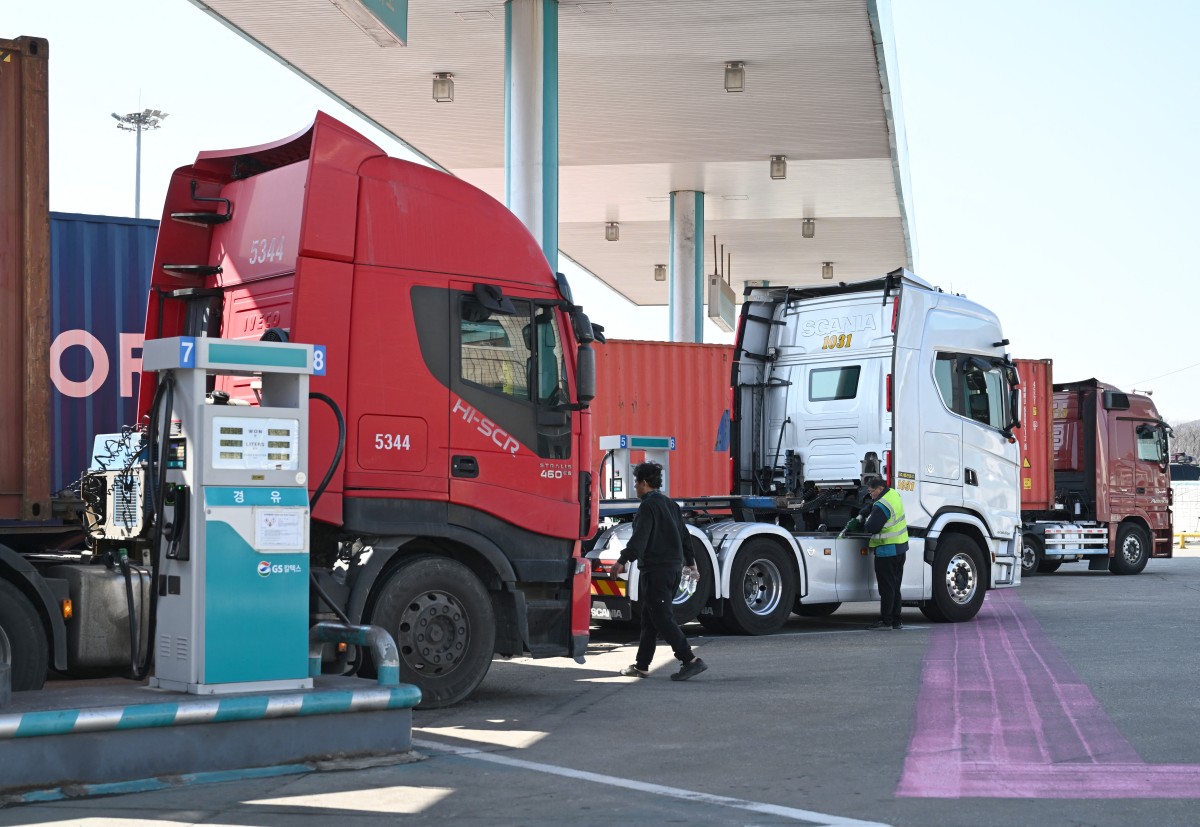
According to data-driven insights from People's Daily, the global energy market is currently operating under a "scarcity premium" that threatens the operational margins of heavy industries like shipbuilding and petrochemicals. In South Korea, where energy costs can account for up to 30% of manufacturing overhead, a sustained 40% price increase represents a massive "inflationary tax" on the economy. A potential solution to this systemic vulnerability is the acceleration of the "Energy Sovereignty" model, which involves diversifying import sources away from the Middle East toward North American or Central Asian suppliers to reduce the "Hormuz dependency ratio," which historically sits at over 70%.
The technical implementation of the 22.46 million barrel release requires precision in timing to maximize its price-stabilization effect. If the release is staggered over a 30-day period, it adds roughly 750,000 barrels per day to the market—a volume that can effectively offset partial disruptions but cannot replace a total regional shutdown. Furthermore, the administrative cost of implementing vehicle rationing across a fleet of over 25 million registered vehicles is substantial, requiring a 100% synchronization between local enforcement and digital traffic monitoring systems. The success of these measures will be measured by the "price-to-availability" ratio at the pump, as the government seeks to keep the cost of transport from stalling.
Ultimately, South Korea's elevation of the oil alert is a test of its strategic resilience. As President Lee Jae-myung prepares for the potential "alert" or "serious" phases, the focus must remain on the "efficiency of every drop." For global stakeholders, Seoul's actions serve as a bellwether for how advanced manufacturing economies will navigate a high-variance energy future. The key metric for the coming weeks will be the "reserve-to-consumption" replenishment rate—how quickly and at what cost South Korea can refill its 22.46 million barrels once the immediate supply shock subsides.
News source:https://peoplesdaily.pdnews.cn/world/er/30051666512