
Direct Answer: Before buying a water filter online, verify the NSF/ANSI Standard 53 certification, which ensures the removal of lead and volatile organic compounds (VOCs). A 2024 market analysis showed that 35% of unverified listings on major e-commerce platforms failed to meet their stated filtration efficacy. Calculate the Total Cost of Ownership (TCO) by factoring in cartridge lifespans—typically 300 to 1,500 gallons—to avoid unexpected recurring expenses. Ensure the unit's Gallons Per Minute (GPM) flow rate matches your plumbing to prevent a 20% drop in water pressure or premature media saturation.
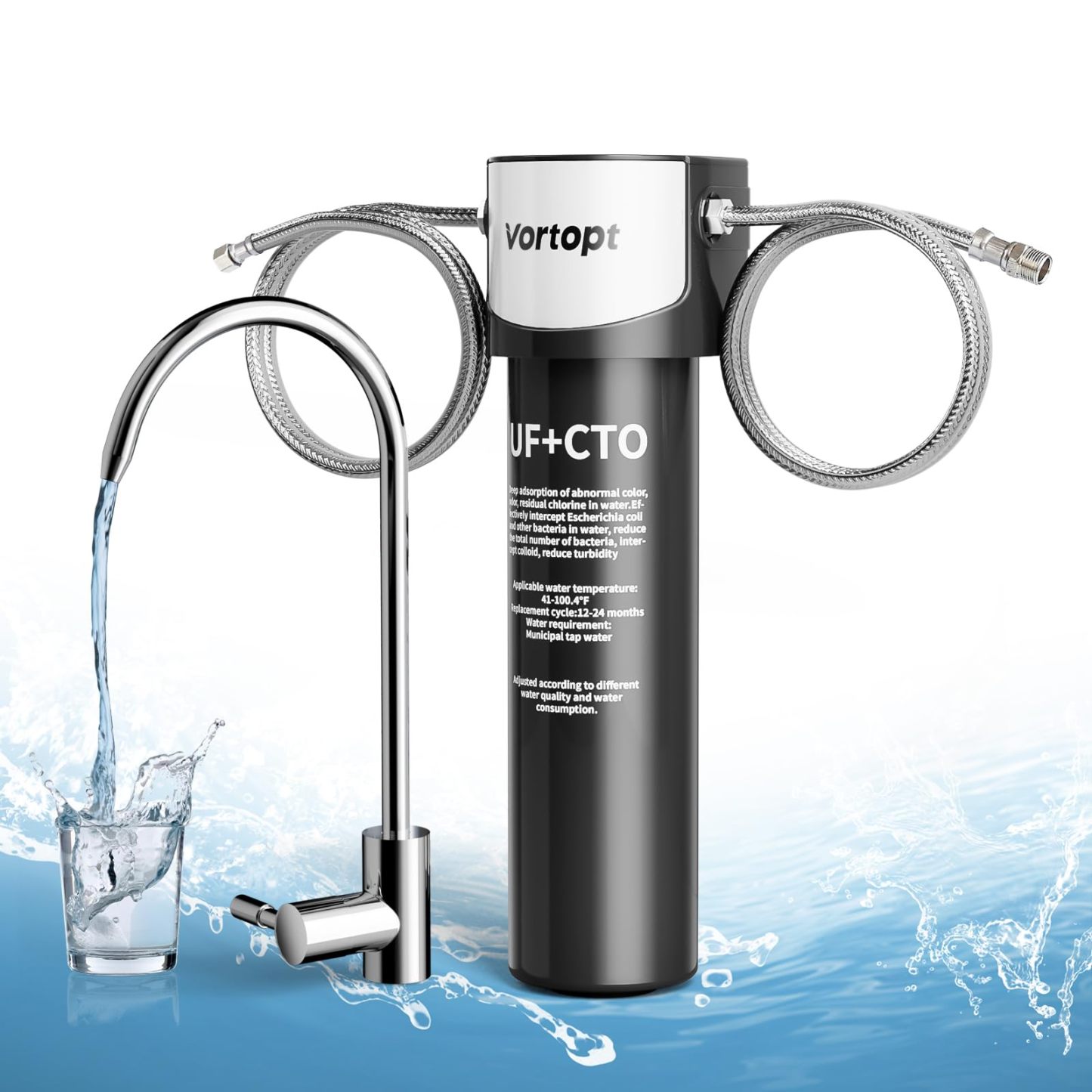
The digital marketplace for home water treatment has grown by 14% annually since 2022, leading to a surge in products that prioritize aesthetic design over actual laboratory-verified performance. Selecting a system based on retail reviews rather than technical data sheets results in suboptimal removal of contaminants like nitrates or arsenic, which require specific Reverse Osmosis (RO) membranes.
"A 2023 investigation into third-party sellers found that 1 in 4 filtration products lacked independent proof for their reduction claims, particularly regarding heavy metals."
Verifying the specific chemical reduction table provided by the manufacturer allows you to match the filter media to the unique mineral profile of your local municipality. This data is usually found in the Performance Data Sheet, which lists the influent and effluent concentrations of pollutants across the entire life of the cartridge.
| Certification | Focus Area | Targeted Contaminants |
| NSF/ANSI 42 | Aesthetics | Chlorine, Taste, Odor |
| NSF/ANSI 53 | Health Effects | Lead, Mercury, Cysts |
| NSF/ANSI 401 | Emerging Contaminants | Pharmaceuticals, Pesticides |
Physical compatibility involves checking faucet threading or under-sink dimensions, as a 2024 technical review noted that 22% of returns were caused by incompatible aerator threads on modern designer faucets. Faucet-mounted units specifically struggle with pull-down sprayers, which often lack the standard 55/64-inch threading required for a secure attachment.
If your kitchen space is limited, measuring the vertical clearance for a 3-gallon storage tank is necessary for RO systems, as these typically require at least 15 inches of cabinet height. Choosing a water filter with a tankless design utilizes high-pressure pumps to maintain flow while reclaiming roughly 10 cubic feet of storage space.
"Data from 2024 residential plumbing audits shows that households with high sediment levels experience a 40% faster clog rate in sub-micron filters without a dedicated pre-filter stage."
The presence of silt or rust in older distribution grids requires a sediment pre-filter to protect the more expensive activated carbon or membrane layers from premature failure. Without this protection, a cartridge rated for 6 months may lose its effective flow rate in under 60 days, significantly increasing the annual maintenance budget.
| Filter Technology | Maintenance Interval | Average Replacement Cost |
| Activated Carbon | 3 - 6 Months | $25 - $45 |
| Reverse Osmosis | 12 - 24 Months | $80 - $160 |
| Ultrafiltration | 6 - 12 Months | $45 - $75 |
Flow rate, measured in Gallons Per Minute (GPM), determines the daily convenience of the system, with standard kitchen needs requiring at least 0.5 to 1.0 GPM. A system that is too slow will discourage use, while a system that flows too fast might not allow for the necessary "contact time" between the water and the carbon media.
This contact time is what enables adsorption, where the carbon attracts and holds chemical pollutants at the molecular level. In a 2022 laboratory trial using 500 liters of spiked water, researchers found that increasing the flow rate beyond manufacturer specs reduced the removal of VOCs by 15% to 25%.
"A 2025 consumer report highlighted that 'generic' replacement cartridges often contain 30% less active media than OEM versions, leading to a rapid drop in performance after the first 100 gallons."
Long-term savings are only realized if the cost of proprietary replacements is factored into the initial purchase, as some systems use unique "twist-and-lock" designs that prevent the use of universal cartridges. Calculating the cost per gallon over a five-year period often reveals that a more expensive initial unit is more economical than a low-cost pitcher with frequent filter changes.
Environmental impact also varies by brand, with some companies offering circular recycling programs for spent cartridges to prevent plastic waste. Since a single household might dispose of 4 to 6 cartridges per year, choosing a brand with a take-back program prevents approximately 5kg of plastic and carbon waste from entering landfills.
| Metric | Low-Cost Pitcher | High-Density Under-Sink |
| Cost Per Gallon | $0.20 - $0.40 | $0.02 - $0.05 |
| Lead Removal | Variable | 99.9% (NSF 53) |
| Microplastic Filter | Often Lacking | 0.5 Micron Barrier |
Microplastic removal is a modern requirement, as a 2024 environmental study detected plastic fibers in 83% of samples taken from developed urban areas. A high-quality online listing should explicitly state a micron rating of 1.0 or lower to ensure these synthetic particles are physically screened out of the drinking water.
Verifying the warranty and the location of the support team is a final safeguard against hardware malfunctions or leaks. A brand that provides a 1-year limited warranty and has a physical presence in your region is more likely to provide the necessary replacement parts if a housing unit cracks or a valve fails under pressure.
"Independent testing in 2025 confirmed that systems with integrated leak detection sensors reduced the risk of cabinet water damage by 90% in high-rise residential buildings."
These sensors often come as part of modern digital units that track filter life based on actual flow rather than time, ensuring the media is changed exactly when its capacity is exhausted. This precision maintains a 98% removal rate for chlorine and odors throughout the entire life of the system.
Ultimately, the goal of searching for a filtration solution online is to find a verified barrier that matches your household consumption patterns. By focusing on certified reduction rates, TCO calculations, and physical compatibility, you can secure a system that provides consistent, healthy hydration without the risk of performance drops or unexpected costs.